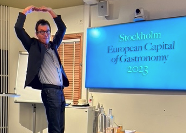
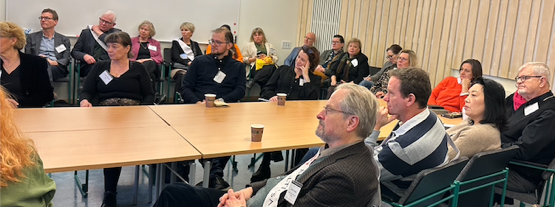
International collaboration that took off with the gastronomy conference in Stockholm in 2023 is now developing. The Stockholm initiative has proved to have both considerable vitality and a distinct taste for travel. In Stockholm, our ambition was to bring together and make visible the broad field of gastronomic knowledge. At Stockholm University, researchers and practitioners met to discuss taste, pleasure, culture, sustainability and societal development. The conference was supported by the Académie Internationale de la Gastronomie (AIG), and the ensuing collaboration acquired a more established structure through AIG’s Scientific Committee (ASC), which I have the privilege of chairing. One of its important tasks is to develop future symposia in collaboration with national academies and universities. Part of the conference’s legacy can also be found in the proceedings so admirably produced by NAFS and Örebro University.
In Madrid in 2025, the discussion was taken further under the theme “Reframing Gastronomy”, with the Spanish Academy of Gastronomy and CEU San Pablo University as organisers. The development of gastronomy through innovation, sustainability and new dining experiences was at the heart of the conference. It has also acquired a scientific afterlife in a special issue of the International Journal of Gastronomy and Food Science with Gregorio Varela-Moreiras and Teresa Partearroyo as guest editors and with contributions from Charles Spence and Marc Stierand on “Culinary Creativity” as well as by Gregorio Varela and Claude Fischler’s and myself on “Gastronomics”.
Later that same year, in 2025, the focus shifted towards gastronomy’s foundations in nature and society. The symposium in Belém do Pará, in the Amazon, organised in collaboration with the Universidade Federal do Pará, was devoted to “Regional Gastronomy and Sustainability”. Here, biodiversity, local food traditions, cultural heritage and regional development came together. Gastronomy offered a way into a wider conversation about the sustainable development of environments and local communities. One of the symposium’s outcomes was the “Letter of Belém”.
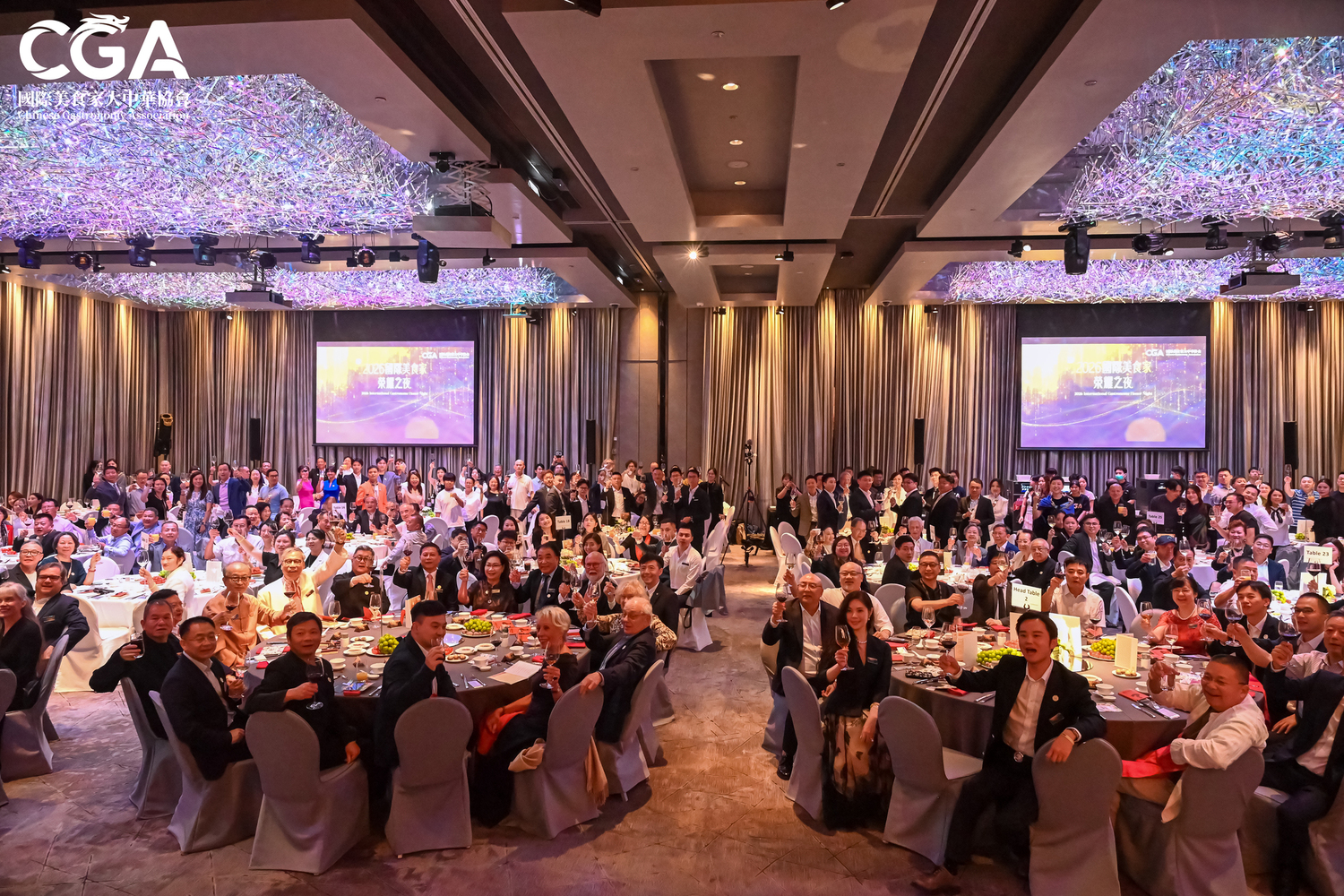
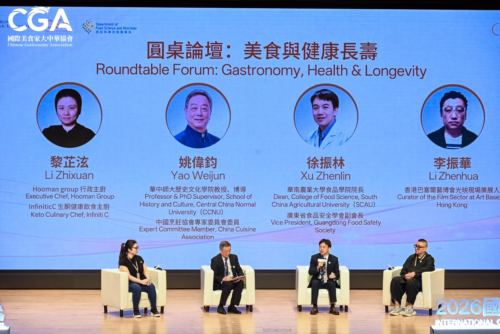
On 5 September 2026, the Chinese Gastronomy Academy, in collaboration with AIG, brought together some 600 participants at The Hong Kong Polytechnic University. The programme explored gastronomy, health and longevity, science and innovation, and the importance of gastronomy for the identity and development of places. Contemporary research and technology encountered Chinese food traditions and longstanding understandings of the relationship between food, health and wellbeing. A glimpse of the symposium is available here. For me, the symposium made particularly clear how much gastronomy stands to gain from an open dialogue between different traditions of knowledge. A few of us have brought together our impressions in the accompanying essay, “Hong Kong 2026: A Hospitable Table for Gastronomy” – a little reflection with scholarly ambitions.
At the close of the Hong Kong symposium in 2026, the conference flag was passed to Finland. The next symposium will be held at the University of Helsinki on 23–25 August 2027 under the theme “Gastronomy meets systems in food security”. The perspective now broadens to include gastronomy’s place in sustainable and resilient food provision, embracing both everyday meals and society’s preparedness for future crises and security challenges. How can access to food be reconciled with health, environmental responsibility, food culture and the pleasure of a good meal? This is a question to which our Academy has much to contribute.
The announced thematic areas include everyday and Nordic gastronomy, the food and technologies of the future, and questions of culture, equality and access to food. I very much hope that several of you will participate, join one of the thematic tracks now taking shape, or propose a track of your own. Claude Fischler, Guje Sevón and I are planning a track in which we shall continue to explore “what is gastronomic about gastronomy”, taking taste, pleasure and commensality as our points of departure. There is ample room for additional research or policy tracks around the great gastronomic table.
Looking further ahead, two other symposium are being planned already !
To my mind, a clear intellectual progression is emerging across the series. Stockholm brought the field of knowledge together; Madrid reconsidered its conceptual framing; Belém emphasised its ecological and regional foundations; and Hong Kong opened a dialogue between different traditions of knowledge. Helsinki will take us into the major questions surrounding food systems. The emphasis changes, but earlier questions travel with us, acquiring fresh meanings along the way.
The 2026 International Gastronomy Symposium in Hong Kong, organised by the Chinese Gastronomy Association (CGA) and hosted by The Hong Kong Polytechnic University, turned out to be a remarkably hospitable table for gastronomy, in both the literal and the intellectual sense. Around that table, modern science, clinical nutrition, technology, Traditional Chinese Medicine, inherited food knowledge, philosophy and cultural belief were all given room to speak. Although the meeting took place in Hong Kong and naturally drew particularly strong participation from Hong Kong, Shenzhen and the Greater Bay Area, its ambition was broader: it was conceived as an international symposium for China and as a meeting place between Chinese and international approaches to gastronomy.
Around 600 participants, scholars from 14 universities and 19 sessions gathered around three main themes: gastronomy and health, with particular attention to longevity; gastronomy, innovation and technology; and gastronomy, place branding and development. The scale was impressive, but conferences are rarely remembered for their numbers. They are remembered for the moments that make one stop, look again and occasionally reconsider something one thought one already understood.
Much Western academic research has achieved extraordinary precision by drawing boundaries. Nutrition is distinguished from medicine, medicine from religion, empirical evidence from inherited belief, and physiological effects from cultural meaning. This division of intellectual labour has been enormously productive: it has allowed us to measure, compare, test and explain with a degree of precision earlier generations could hardly have imagined. Many of the Chinese contributions we encountered in Hong Kong, however, seemed less concerned with keeping all these categories in their proper academic boxes.
The programme itself was revealing. Within the same discussion of gastronomy, health and longevity, and clinical nutrition appeared alongside Traditional Chinese Medicine, while the broader conversation ranged across inherited food knowledge, philosophy, culturally embedded beliefs and ideas of balance and harmony developed over centuries. Food could consequently be discussed simultaneously as nourishment, pleasure, medicine, cultural inheritance and a means of maintaining bodily and mental balance; particular ingredients and edible organisms could be associated with seasons, bodily conditions, warming or cooling properties, recovery, strength or wellbeing. Some such claims would, in a Western university, immediately be allocated to separate departments. Others might not be allowed through the departmental door at all. In Hong Kong, the intellectual borders appeared more porous, and that deserves to be taken seriously.
This would be badly misunderstood as an absence of science. On the contrary, the symposium was filled with modern research on medicine, nutrition and technology. The interesting point was that science appeared within a larger ecology of knowledge. Experimental and clinical perspectives sat alongside traditional medicine, accumulated experience, philosophy, inherited cultural beliefs and a broader cultural horizon shaped, among other things, by Buddhist and Taoist traditions. To Western ears, some of these elements may sound scientific, others philosophical, medical, symbolic or spiritual; the perspectives encountered at the symposium did not always seem to require us to decide quite so quickly which drawer each of them belonged in.
That may be intellectually useful. It allows questions to be asked that a stricter scientific division of labour sometimes excludes before enquiry has even begun: can food comfort as well as nourish; can a meal affect mental wellbeing as well as metabolism; can inherited knowledge contain observations that modern science has not yet formulated, or perhaps has not yet thought worth testing; and can pleasure itself be part of health rather than merely a suspicious side effect of eating? Such questions are not grounds for abandoning scientific scrutiny. Quite the opposite: they enlarge the field of what we consider worth scrutinising.
The hospitality of the symposium was not only intellectual; it was also remarkably tangible. Around sixty students had been mobilised as conference hosts and guides, and their enthusiasm, courtesy and apparently inexhaustible ability to make international delegates look as though they knew exactly where they were going contributed greatly to the atmosphere of the meeting. Academic conferences depend on ideas, of course, but they also depend on people who know where the next room is. In this sense, the students did more than help the conference run smoothly: they helped create the openness and generosity that characterised the symposium as a whole.
This broader intellectual ecology was particularly visible in the discussions of longevity. In much Western research, longevity rather quickly becomes a matter of biomarkers, nutrients, medical interventions and measurable outcomes. All of these are important. In Hong Kong, however, longevity repeatedly appeared as part of a larger configuration involving food traditions, preparation, balance, social practices, pleasure and ways of living. The question was therefore not only how long we can live, but how we should live while doing it. Three of us, having already passed eighty, listened rather attentively at this point. We hesitate to present ourselves as scientific evidence but remain available for continued longitudinal observation.
Shenzhen then provided a useful corrective to anyone tempted to imagine this concern with inherited knowledge as nostalgia for an ancient past. On 4 September the international delegation visited the former small market town in the Pearl River Delta that, after becoming China’s first Special Economic Zone, developed in less than half a century into a global megacity approaching twenty million inhabitants. For us gastronomes, two moments stood out. One was an outstanding Cantonese luncheon at Xifu Liun Atelier, where the cuisine was matched by a striking contemporary architectural setting, museum-quality art and remarkable views. The other came at the CGA headquarters, where we were introduced to automated cooking technology. We watched kitchen robots prepare five dishes for roughly thirty people in about thirty minutes, using systems with intelligent temperature control, standardised output and self-cleaning, in formats intended for restaurants, institutional kitchens and even domestic use. For a group of gastronomes it was rather like being introduced to a new species. We observed the machines with professional curiosity, considerable admiration and perhaps a slight concern for the future employment prospects of some of our chef friends.
Yet the demonstration made an important point: the robots were not presented as an escape from culinary tradition, but as a means of translating recipes, temperature, seasoning and cooking sequences into digital processes. The Shenzhen demonstration therefore did not present the future of gastronomy as a choice between ancient tradition and advanced technology; it was perfectly prepared to have both at the same table. A robot can, as our taste buds can testify, reproduce a recipe quite competently. Whether it can develop gastronomic judgement remains an open question. For the time being, at least, there is still some work left for the rest of us.
It is tempting to describe all this as Western science meeting Eastern wisdom, and there is something in that formulation, but it is also too neat. Western gastronomy is not merely scientific and analytical; it contains tradition, ritual, religion, pleasure and inherited knowledge. Nor is Chinese gastronomy somehow pre-scientific. The Hong Kong symposium demonstrated precisely the opposite: sophisticated science and technology were everywhere. The difference we sensed was subtler and concerned the boundaries around legitimate knowledge. Western research has become exceptionally good at taking complex phenomena apart. Many of the Chinese contributions suggested a greater willingness to begin with relationships: between food and body, season and health, pleasure and wellbeing, tradition and innovation, individual experience and a wider way of life. Perhaps that is why the symposium felt intellectually refreshing. It did not ask us to abandon what Western science does well; rather, it invited us to consider whether some of the connections we separate analytically may eventually have to be put together again. This idea resonates strongly with the wider challenge facing gastronomy as an emerging international field of knowledge.
For AIG’s Scientific Committee, Hong Kong was one stage in an ongoing international conversation. Stockholm asked where gastronomic knowledge is produced; Madrid explored how a fragmented field might be reframed; and Belém brought gastronomy into conversation with biodiversity, regionality and sustainability. Hong Kong added something different: what happens when different traditions disagree not only about the answers, but also about what kinds of knowledge should be invited to the table? That is a more interesting question than deciding whether East or West is right. Perhaps the most encouraging impression we brought home from the China symposium in Hong Kong was precisely that the perspectives we encountered deserve to be taken seriously because they did not simply reproduce the dominant Western research agenda. They may ask different questions, admit different forms of evidence and make connections that our own disciplinary divisions have taught us not to see.
A genuinely international gastronomy research community should not require everyone to think in the same way. It should make all of us slightly less certain that our own way is the only sensible one. After all, a meal may be scientifically analysed, nutritionally optimised, beautifully presented and technologically flawless, and still benefit from a little wisdom. Preferably, of course, before dessert.
In 2022, four Swedish Academies – organized along the food chain – decided to work closely together to promote Gastronomy as a positive driving force for necessary changes in national as well as international food systems. This was done through a distinct consumer perspective on food, meals and gastronomy – “from table to farm” – with a focus on positive taste experiences and delightful meals.
The result of the collaboration was the creation of three programs that were launched during 2022:
Sweden’s New County Meals4 – a “gastronomic mobilization and positioning” of all 26 cultural regions in Sweden through the development of a three-course dinner including the creation of a table with all accessories. In all more than 500 persons were involved in the creation of the meals and as of today served to an estimated 7,000 guests in Sweden and abroad.
Stockholm – European Capital of Gastronomy 20235 – a joint effort by the academies and the city of Stockholm to promote the city as an innovative gastronomic destination “worth visiting” in Europe. Around 100 actors contributed with gastronomic content showcasing over 200 food and drink events all through 2023.
The Tore Wretman Symposium 20226 a research and policy conferences designed to strengthen gastronomy as a multidisciplinary science-area. The conference which was hosted by Stockholm University, attracted 100 participants to 12 tracks and 74 presentations.
Launching the Stockholm Gastronomy Conference
Based on the positive outcome of the Tore Wretman Symposium in 2022, the four Academies – supported by the A.I.G. and the European Community of New Gastronomy decided to move forward with an international multidisciplinary research and policy conference in Gastronomy in 2023, to be hosted by Stockholm University. The overall theme of the conference was “gastronomy research and policy studies – the state of the art”, signaling an ambition to sum-up contemporary research and emerging policy issues in the comprehensive area of gastronomy. The ambition was also to create a solid foundation for collaboration in areas of strategic importance, to be discussed in future international multidisciplinary gastronomy conferences.
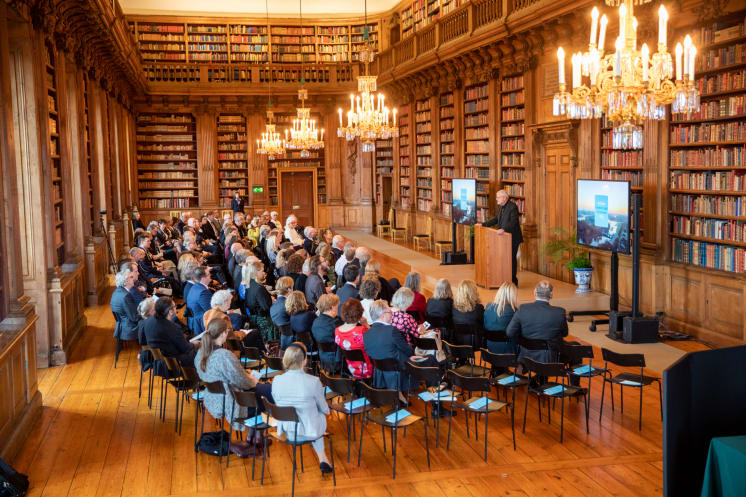
Martin Lind, President of the Swedish Academy of Gastronomy, presents the programme to the King and representatives of gastronomy interest groups in Sweden at the Bernadotte Library on 28 November 2022.
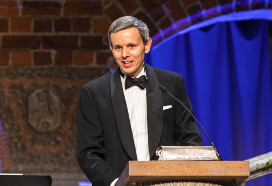
The Planning continued and an updated version of the plans for the conference were presented to the 300 guests at the opening banquet for Stockholm Capital of Gastronomy in Stockholm City Hall, January 13th, 2023. During the banquet, Fabien Petitcolas, President of the A.I.G., gave an inspiring statement where he strongly advocated for a new proactive role of gastronomy in the future. As an example he used David Cameron´s fateful decision to commit to the Brexit referendum while eating a lukewarm pizza at a fast-food restaurant in the Chicago airport, and ended his speech with the rhetorical question – “Had he eaten better, would the present of Europe be any different?”
Fabien Petitcolas delivers his speech at Stockholm City Hall.
Call for Research and Policy Tracks
Gastronomy as a research area is split up in many disciplinary subareas. As one of the purposes of the Stockholm Gastronomy Conference was to strengthen gastronomy as a comprehensive research area “in its own right”, it was decided to formulate a “call for tracks” directed at the research community at large, rather than attempting to identify possible track themes. The call for tracks was thus opened to researchers from all science-areas and academic disciplines, as well as to policy and decisionmakers from different sectors of the multifaceted gastronomic value chain.
The outcome of the call was 27 track-proposals, covering natural, social and medical sciences as well as medicine, technology and humanities! The proposals were later screened and evaluated by the Honorary Advisory Board that was created to scientifically support the academic part of the conference8.
Track Structure and call for Abstracts
The evaluation of the tracks eventually resulted in the selection of 24 tracks9. These tracks were then divided into four main themes – each containing 6 tracks. The labels of the different tracks are listed in the end of this paper:
Taste, pleasure and delight as levers for sustainable food consumption. The tracks in this theme dealt with “taste, delight and enjoyment” of food meals and gastronomy as positive levers for sustainable, safe, and healthy food consumption. One track discussed for example the differences in perceived value of “what is eaten” is (e.g. on the menu) in culinary – or in neutral of nutritional terms. Other tracks adresssed the importance of taste experiences from a sensory perspective, as well as the health and climatic impact of “tasty food” in public meals.
Gastronomy according to terroir, place, space and culture addressed the role of place in the form of terroir, space and culture to shape unique food and meal traditions. Here, the tracks and sessions deal, among other things, with how places (cities, regions, etc.) may develop into gastronomic destinations, and other tracks dealing with dietary cultural heritage, and others looking into restaurants as spaces for local cultural production.
Gastronomy – a powerful force of transformation gathered researchers and policy makers sharing an interest in how gastronomy in different forms can be used in the social, economic, and environmental development of society. The track “Eat Drink and Pray” addresses the role of gastronomy in different religions, and another track presents new research on the role of food in revitalizing the environment and transforming the food system.
D. Gastronomy – norms, skills, competencies and education focused on the development of norms, skills, competences in the field of gastronomy. One of the areas addressed in some of the track’s deals with chefs as managers and leaders, another addressed hospitality as an important element in the restaurant and hospitality industry.
Attendance, Abstracts and Presentations
In all 246 persons from 23 different countries around the world were registered at the conference. Out of the 183 abstracts submitted to the conference, 156 were accepted for presentation by the track organizers, while another 30 presentations (mainly in the policy area) were accepted without formal abstracts. In al 186 oral presentations were made during the conference. The presentations took place in 5-6 parallel 1.5-hour sessions, with an average of three 30-minute presentations in each session.
Photos taken during the presentations of the different themes.
Each track organizing team was responsible for managing their own track, including structuring the presentations and assigning chairpersons to each session. As can be seen above, some track-organizers took a very active part in materializing their message!
Embodying Gastronomy as a Science Area – through Meals!
An important element in the Stockholm Gastronomy Conference was the real-life materialization of Gastronomy through all the meals – from dinners to coffee-breaks – served during the conference. All meals were inspired by the different dishes produced in the program Sweden’s New County Dishes, and during lunches and dinners the origin of the different dishes from all over Sweden were orally presented by chefs – in some cases the chefs that had themselves created the dishes.
Towards the International Gastronomy Conference in Madrid 2024
Upon a request from A.I.G. directed to its national member academies in 2023, the Real Academia de Gastronomía in Spain (RAG) declared its interest arranging an international science and policy conference like the one in Stockholm in 2024. This interest was confirmed during the Swedish Gastronomy Award ceremony 2024, organized by the Swedish Academy of Gastronomy at the royal castle in Stockholm. During this ceremony the European Capital of Gastronomy appointment was also transferred from Stockholm to Madrid.
The 24 Tracks at Stockholm Gastronomy Conference
A.1 :Pleasure as the Ally of Healthier Eating
A.2:Beyond Gastronomy – Sensory Challenges and Opportunities for Meals of Tomorrow
A.3:From waste to taste using sensory and consumer science methodologies
A.4:Consuming food: Consumer culture theories as a lens in food studies
A.5:Sustainable, tasty public meals as a lever for food system transformation
A.6:Food and Well-being
B.1:The importance of food experiences for sustainable place making and destination
B.2:Gastronomic Heritage – Dietary and Cultural perspectives
B.3:Sweden’s New County Meals – a National Gastronomic Mobilization
B.4:Restaurants as Spaces for Cultural Production
B.5:Local food systems -when and how the producer interacts with the customer
B.6:A lot can happen over coffee and tea: Swedish Fika, British Afternoon Tea, Japanese Tea Ceremony, Turkish Coffee & Tea Ceremonies, and more
C.1:Culinary Curating – Art as/and/in food vice versa
C.2:Food Supply Security – from a Consumer Perspective
C.3:Eat, drink and Pray: Study of Religions Perspectives on Religion and Meals
C.4:Gastronomy and Social Life
C.5:Gastronomic landscape and biosphere stewardship: Food as a tangible entry point for revitalizing landscapes and equitable food system transformations
C.6:Gastronomy and territorial development: gastro-diplomacy and national/regional branding
D.1:The role and leadership of the Chef in European fine dining restaurants
D.2:Advancing Science to unlock the tacit knowledge of chefs and home cooks -Northern Lights on Food revisited
D.3: Gastronomy’s most important companion – the hosting skills. The contribution of the hospitable meeting and service to gastronomic experiences
D.4:Beverages in Culinary Arts and Hospitality: Norms and new Normalities
D.5:Advancing the future of higher culinary education
D.6:Challenges and opportunities for European Master level education in Gastronomy: Towards pan-European initiatives?
Gastronomy Research and Policy Studies – The State of The Art
23– 26 November 2023, Stockholm University, Sweden
The time has come to gather researchers and policymakers from different fields of science, academic disciplines, research networks, policy areas and sectors of business, to discuss ongoing research and emerging policy issues in the comprehensive area of gastronomy.
The academies behind the conference share the conviction that the academic and political status of gastronomy needs to be strengthened, and used as a positive and powerful resource to make the world we inhabit more environmentally, economically and socially safe and sustainable – and the life we live more enjoyable and meaningful.
This 3rd European conference on Gastronomy will cover social, economic, psychological, medical, cultural and political dimension of food, meals and eating, as well as aspects of art and design linked to culinary experiences.The ambition is to lay a solid foundation for collaboration in gastronomy areas of strategic importance, to be discussed in future conferences within the framework of European Capitals of Gastronomy.